


On November 27th, in order to enhance the safety guarantee capabilities of the hydrogen energy industry chain,UH - Eastern Hydrogen Port Hydrogen Refueling Station organized a fire emergency drill centered on "emergency handling of hydrogen vehicles catching fire" and "standard use of dry powder fire extinguishers". This drill simulated a scenario where a hydrogen vehicle experienced a sudden leak and caught fire during the refueling process. Through practical operations, the feasibility of the emergency plan was tested, and the practical proficiency of employees in using fire extinguishing equipment was simultaneously enhanced, laying a solid foundation for the safe development of the hydrogen energy industry.
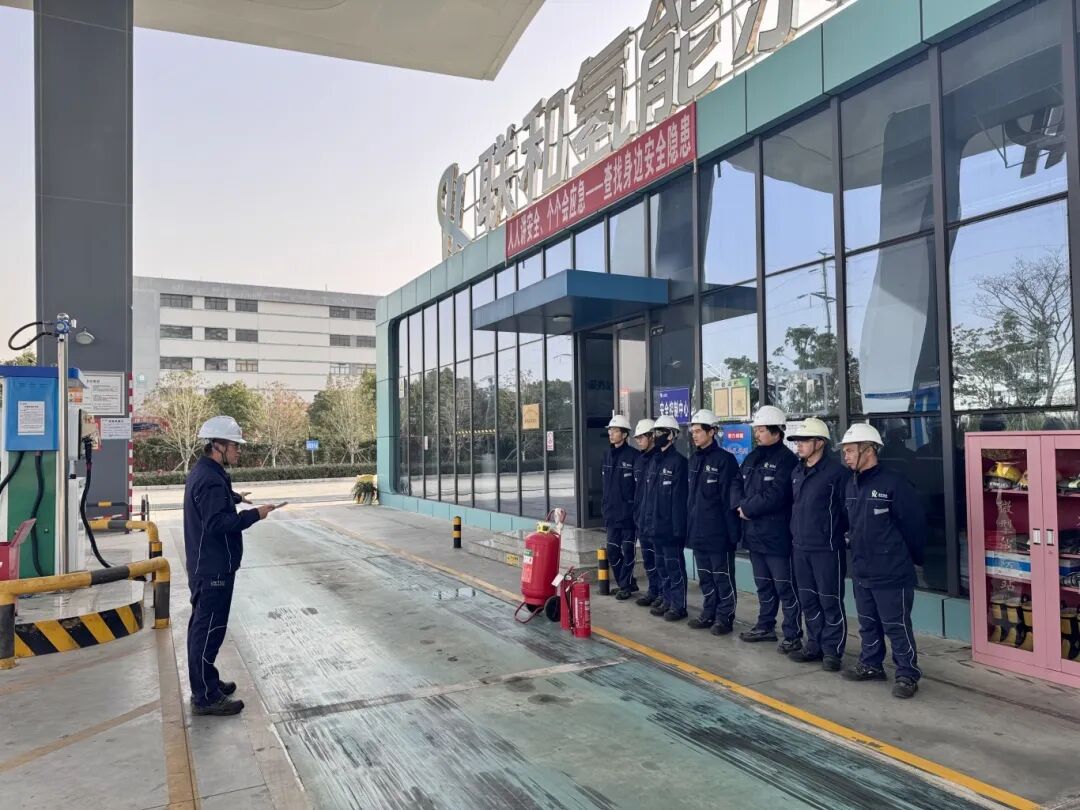
Scene Simulation: Hydrogen-powered truck leaks and catches fire. Multiple parties work together to handle the situation promptly.
The drill was set in the peak operation period of the hydrogen refueling station. During the refueling process, a 49-ton hydrogen-powered truck experienced a valve failure, resulting in hydrogen leakage. When encountering an electric spark, the fire broke out.
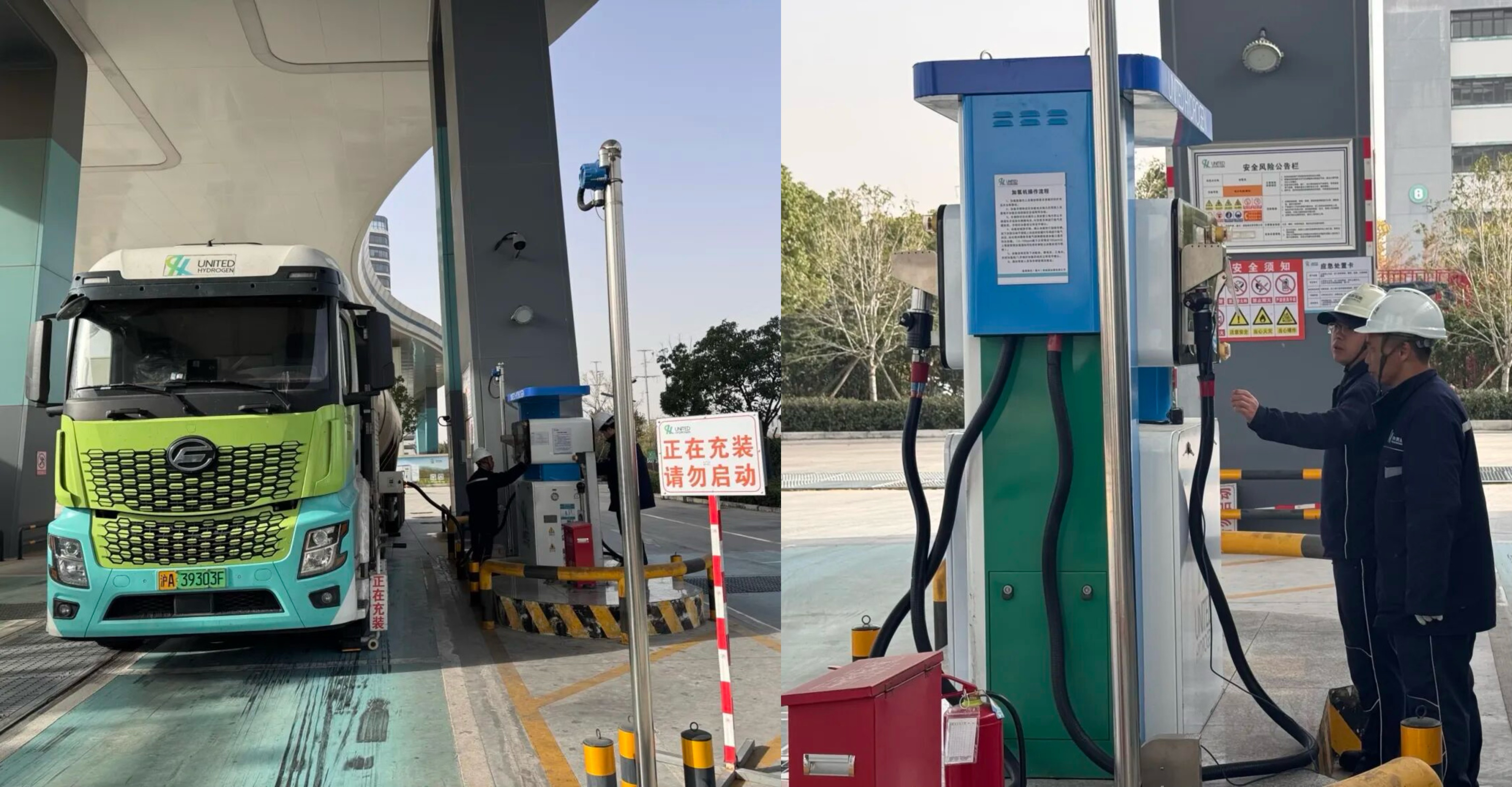
Emergency response procedure:
Initial response:
1、The on-site duty personnel immediately pressed the emergency shut-off valve to stop the hydrogen supply and sounded the alarm.
2. Personnel Evacuation: Staff members promptly guided the surrounding vehicles and personnel to evacuate to a safe area 100 meters away, and set up a warning line to alert vehicles coming from behind.
3. Fire Control: Two employees put on protective gear and used a portable hydrogen detector to determine the extent of the leak. Then, they sprayed water mist around the tank to cool it down and isolate the area, preventing the fire from spreading.
4. Fire Alarm Response: Simultaneously call the 119 fire emergency number, activate the station's emergency plan, use fire extinguishers to cover the battery packs and hydrogen storage tanks at the vehicle's bottom, and use thermal imaging equipment to monitor the internal temperature to prevent re-ignition.
Key details:
·The hydrogen combustion flame appears pale blue and is hardly noticeable under sunlight. During the drill, the fire source was monitored in real time using infrared thermal imaging equipment to avoid the risk of concealed combustion.
· Dual risks of lithium batteries and hydrogen fuel cells: The hydrogen fuel cell packs and lithium battery packs installed on the container trucks need to be cooled down simultaneously to prevent a chain reaction of thermal runaway.
Practical Teaching:
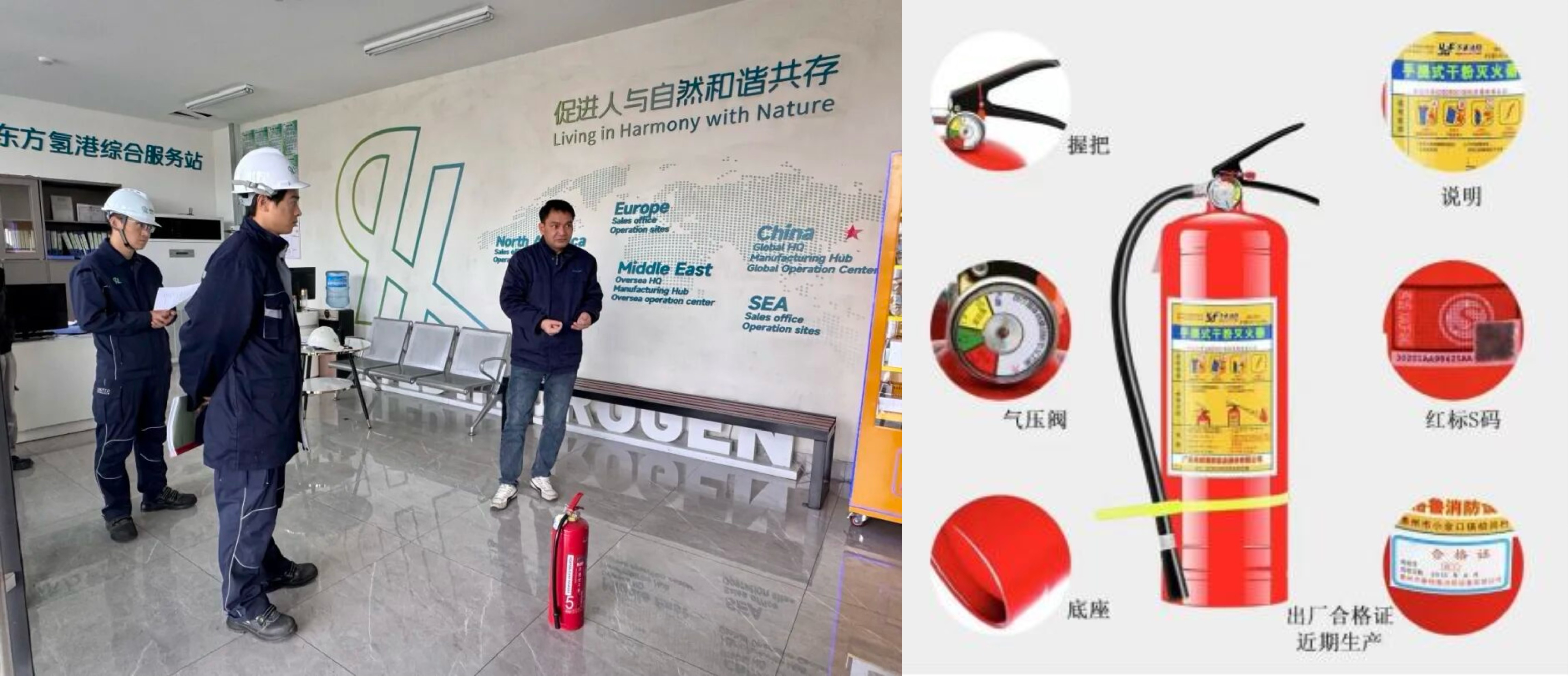
A Comprehensive Analysis of the "Raise, Hold, Press, Pull" Four-Step Method for Dry Powder Fire Extinguishers.

The second stage of the drill focused on the usage norms of fire-fighting equipment. On-site demonstrations were conducted for the operation of dry powder fire extinguishers, and common misconceptions were corrected.
Instruction: Grasp the handle of the fire extinguisher with both hands and keep it in a vertical position to prevent the powder from settling due to tilting.
Pull: Remove the safety pin. Be sure to keep your fingers away from the end of the safety pin to avoid scratches.
Hold: Use your right hand to grip the top nozzle of the hose, and use your left hand to support the bottom of the fire extinguisher, aiming at the base of the flame.
Press: Press down on the handle firmly. The dry powder will spray out in a fan shape, sweeping back and forth to cover the fire source until the flames are completely extinguished.
· Prohibition of spraying at people: Inhaling dry powder particles into the lungs can lead to asphyxiation. During the drill, the principle of "saving people first, then extinguishing the fire" was particularly emphasized.
· Cautionary note on lithium battery fires: For lithium battery fires in new energy vehicles, dry powder fire extinguishers can only suppress the flames. They need to be combined with compressed air foam or fire blankets to continuously lower the temperature and prevent re-ignition.
· Regularly check the pressure gauges: The pressure value of the fire extinguisher should be within the green range. Red indicates insufficient pressure, and yellow indicates overpressure. All cases require immediate replacement.

Yang Ge, the station manager of the UH - Eastern Hydrogen Port Hydrogen Refueling Station, concluded, "As the hydrogen energy industry enters the stage of large-scale development, safety guarantee capabilities have become the core competitiveness. This drill not only tested the emergency response capability of a single station, but also verified the maturity of the 'Eastern Hydrogen Port' industrial chain collaborative safety system. Safety can only be achieved through the entire chain of production, storage, transportation, refueling, and usage. Through regular drills and technological iterations, we are building a hydrogen energy safety ecosystem with 'controllable risks, rapid response, and professional handling'. By adopting a 'practice + teaching' model, we are setting an emergency management benchmark for the industry and laying a more solid safety foundation for the commercial application of hydrogen energy."